Nefertiti Neck Lift
- Services
- Nefertiti Neck Lift
Nefertiti Neck Lift
The procedure ‘Nefertiti Lift’ was named after the Egyptian queen Nefertiti for her sharp jawline, and is highly regarded as a sign of ‘attractivity’.
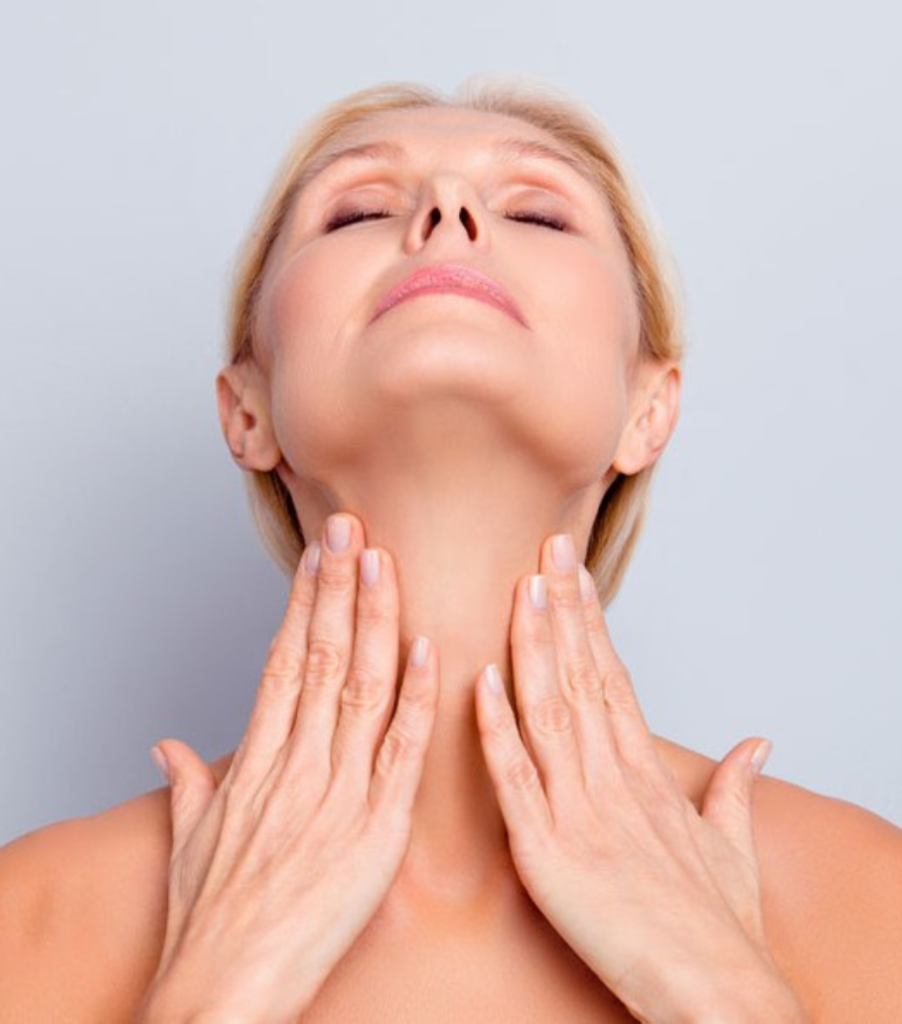
Ageing around the jawline and the neck are the main reasons why some women look older than they actually are. Over time loss of muscle tone, skin fat and gravitational pull lead to the appearance of the famous ‘turkey neck’. The contour of the jawline disappears and platysmal bands look more prominent.
TREATMENT
Anti-wrinkle Injections can be administered into this muscle at various points across the platysmal bands and beneath the jawline, relaxing this muscle and causing unopposed pull from the musculature above and hence a mini non-surgical facelift. It will also reduce the appearance of prominent tendons and muscles in the neck, giving a more slender and feminine looking neck.
FAQ
Frequently Asked Questions
Good candidates for a Nefertiti neck lift using Botox are generally individuals who have mild to moderate sagging or laxity in the skin of the neck and jawline, but do not want to undergo surgery.
The procedure is generally well-tolerated and not considered painful. There may be some mild swelling or bruising at the injection sites, but this typically resolves within a few days. There is no downtime or recovery period associated with the procedure, and patients can resume their normal activities immediately afterwards.
Patients typically see results within 1-2 weeks after the procedure, with full results becoming apparent after 4-6 weeks. The results can last anywhere from 3-6 months, depending on individual factors such as the amount of Botox used, the patient's metabolism, and the extent of muscle movement.
As with any cosmetic procedure, there are some risks and potential side effects associated with the Nefertiti neck lift using Botox. These may include temporary swelling, bruising, or redness at the injection sites.
- Pregnant or breastfeeding women: Botox has not been studied in pregnant or breastfeeding women, and it is not known if it is safe for them to receive the injections.
- Individuals with neurological disorders: Botox injections may be risky for individuals with certain neurological disorders such as Myasthenia gravis, Eaton-Lambert syndrome, and other neuromuscular disorders.
- Individuals who are allergic to any of the ingredients in Botox: Some patients may be allergic to the ingredients in Botox and therefore should not receive the injections.
- If you have had facial surgery or plan to have surgery in the future
It's important to have a consultation with with a physician prior the treatment. They will take into consideration your medical history, current medications, and overall health status to determine if Botox is safe and appropriate for you.
- Avoid touching or rubbing the treated area for at least 4 hours after the treatment.
- Do not apply makeup or any other cosmetic products to the treated area for at least 4 hours after the treatment.
- Avoid lying down or bending over for at least 4 hours after the treatment.
- Avoid engaging in any strenuous physical activity or exercise for at least 24 hours after the treatment.
- Do not drink alcohol for at least 24 hours after the treatment.
- If you experience any discomfort or swelling after the treatment, you can apply an ice pack to the area for 10-15 minutes at a time, several times a day.
